
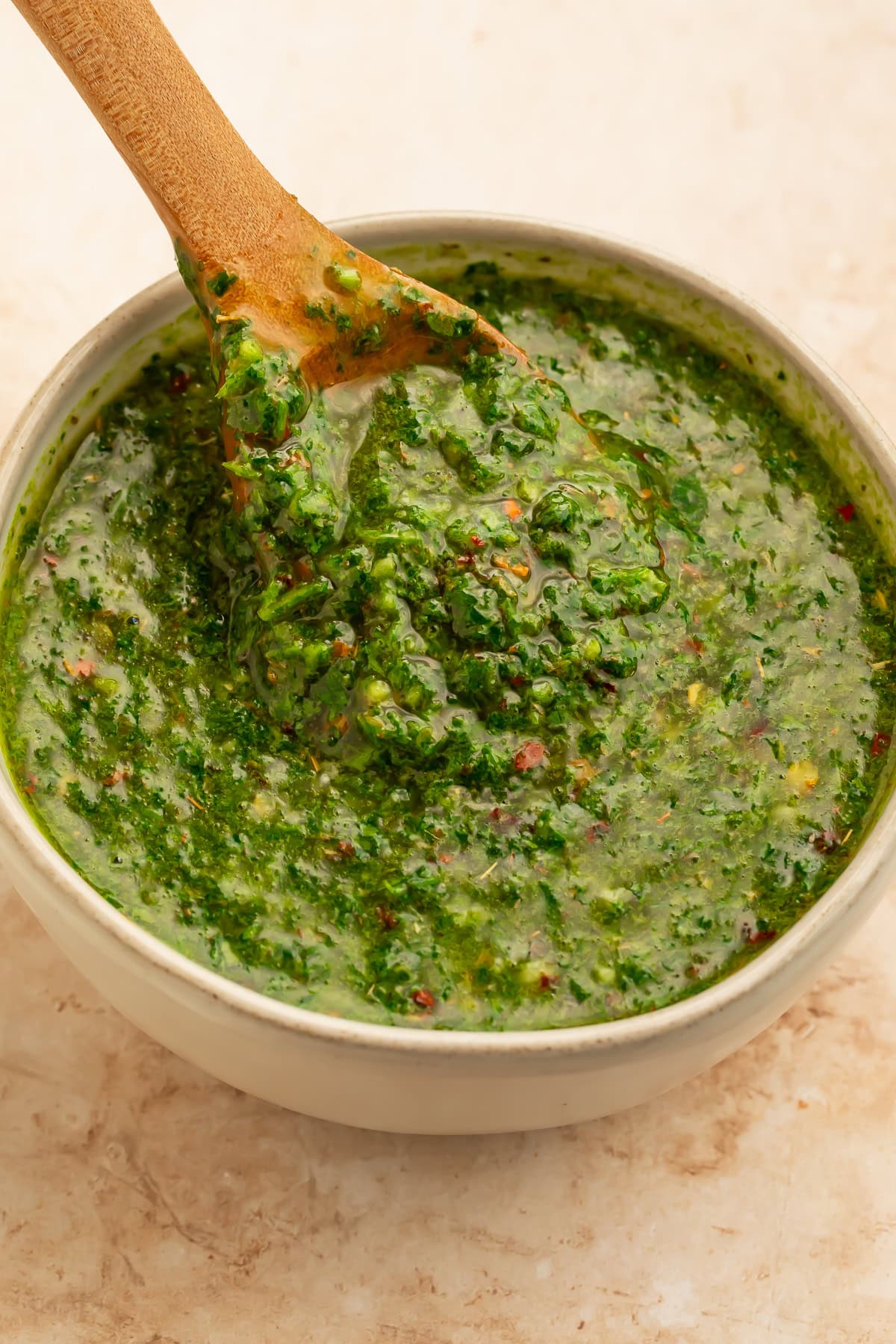
Texas de Brazil Copycat Chimichurri Sauce with Fresh Herbs and Lemon
By Isabella Quinn
Prep
10 min
Cook
0 min
Total
10 min
Servings
16
Level
Easy
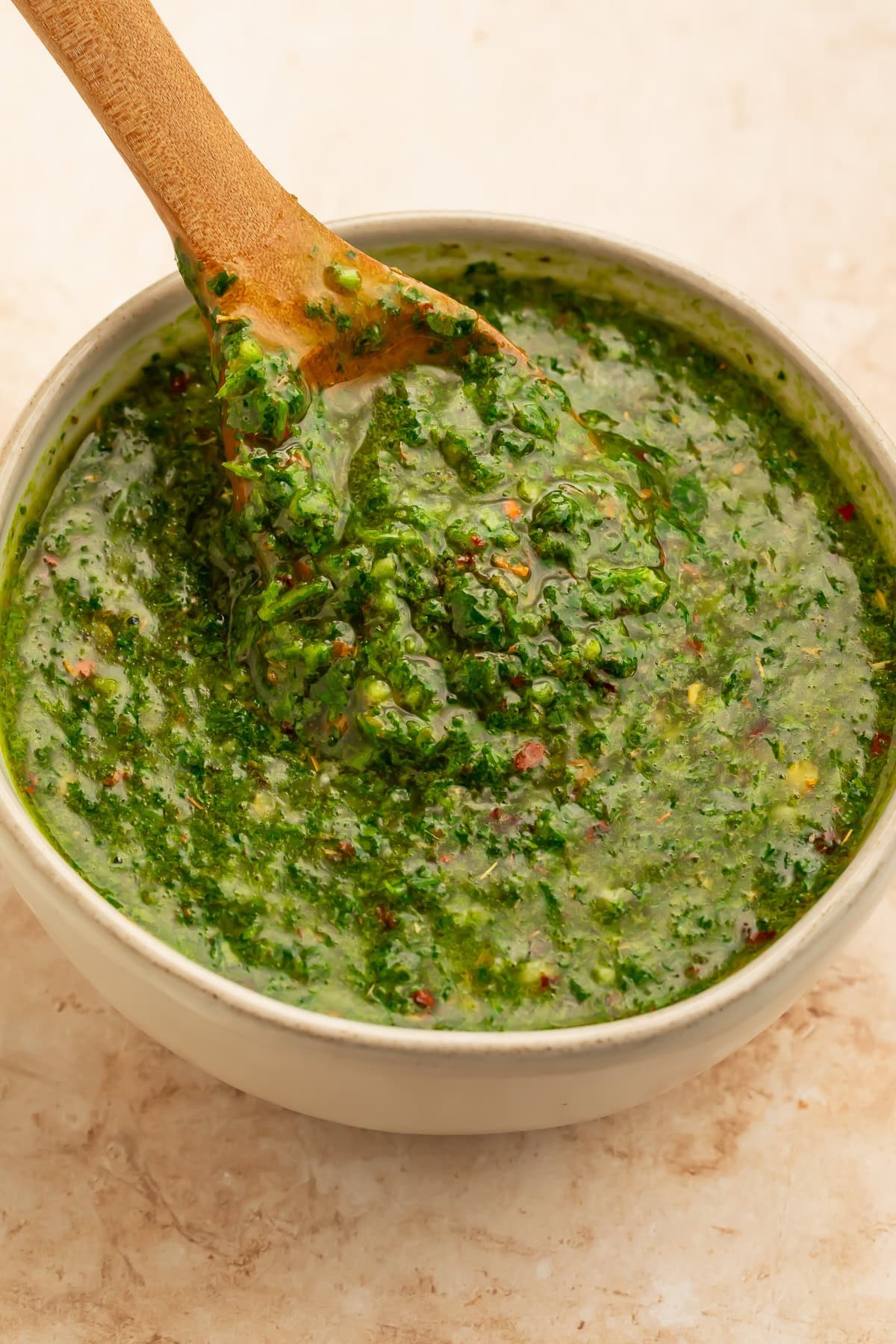
Brief pulses cut the garlic and herbs without turning the oil-based sauce into a paste. A copycat Texas de Brazil sauce, a raw, acidic green sauce seasoned with parsley, cilantro, lemon juice, garlic, oregano, and red pepper flakes, is one example.
The sequence of adding ingredients in the food processor matters. Ingredients to add first include garlic, parsley, and cilantro. Other ingredients to add include olive oil, lemon juice, oregano, red pepper flakes, and salt. Chopped garlic and leaves added first help the food processor blades catch them evenly. Good-quality olive oil is an important ingredient in the final dish. Lemon juice, rather than vinegar, adds acidity to the Texas de Brazil recipe.
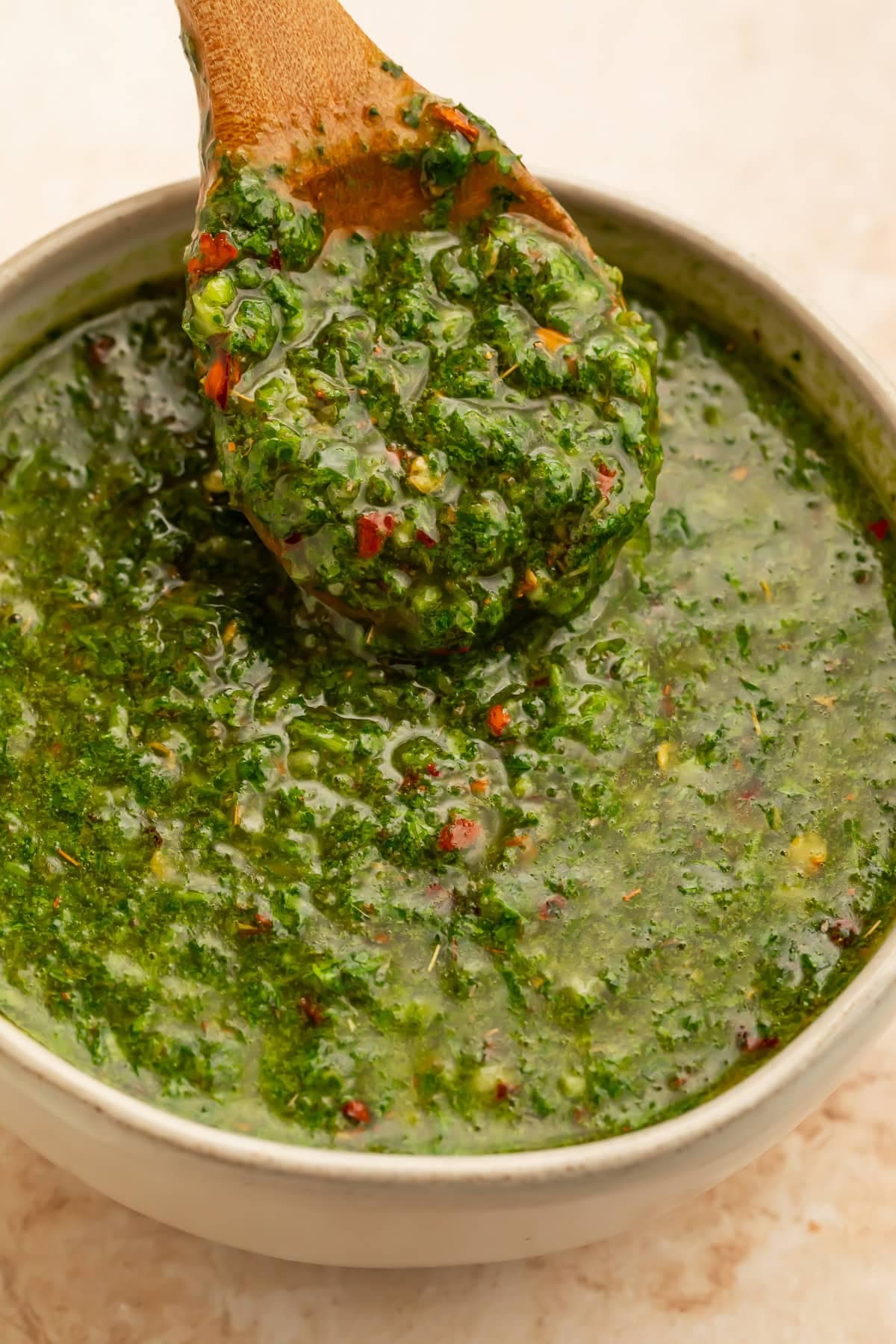
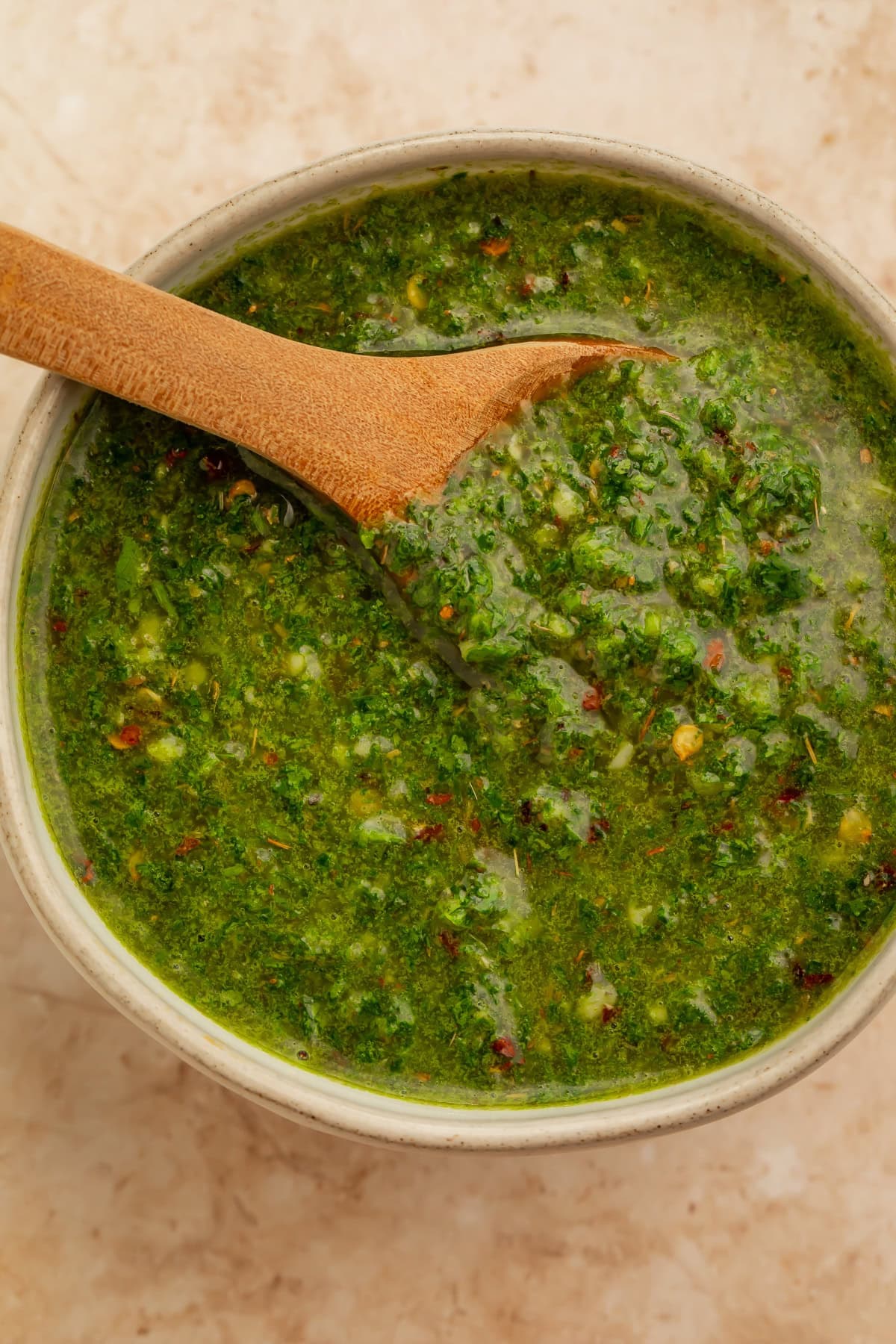
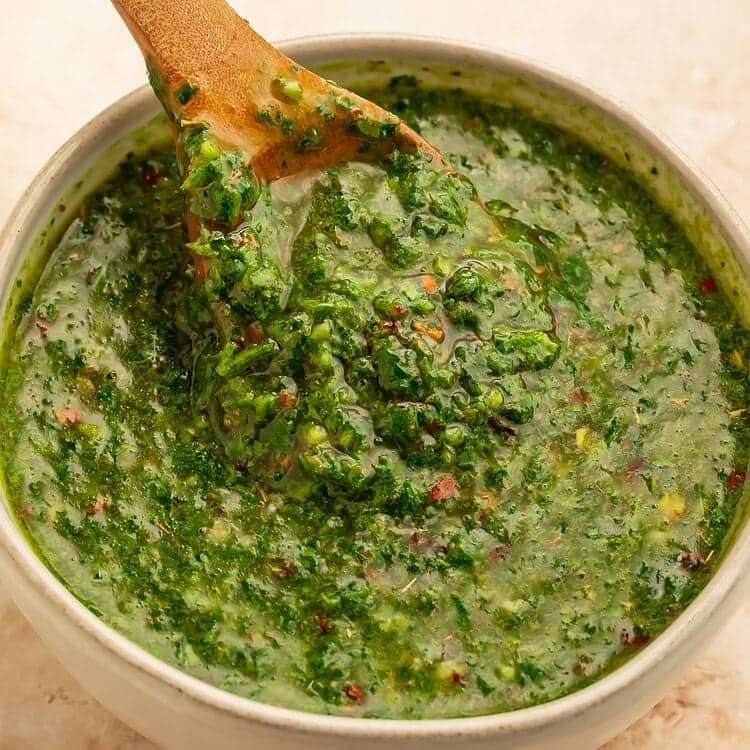
Search for recipes with very finely chopped herbs that are distinct from the oil in the sauce. The sauce should be thin enough to drizzle over food and not creamy. Overprocessing is a common problem with this type of sauce and can result in a paste-like texture. Pause to stir the herbs that have settled on top of the sauce. Pulse the processor multiple times. Add additional garlic, pepper, and salt at the end of preparation if desired.
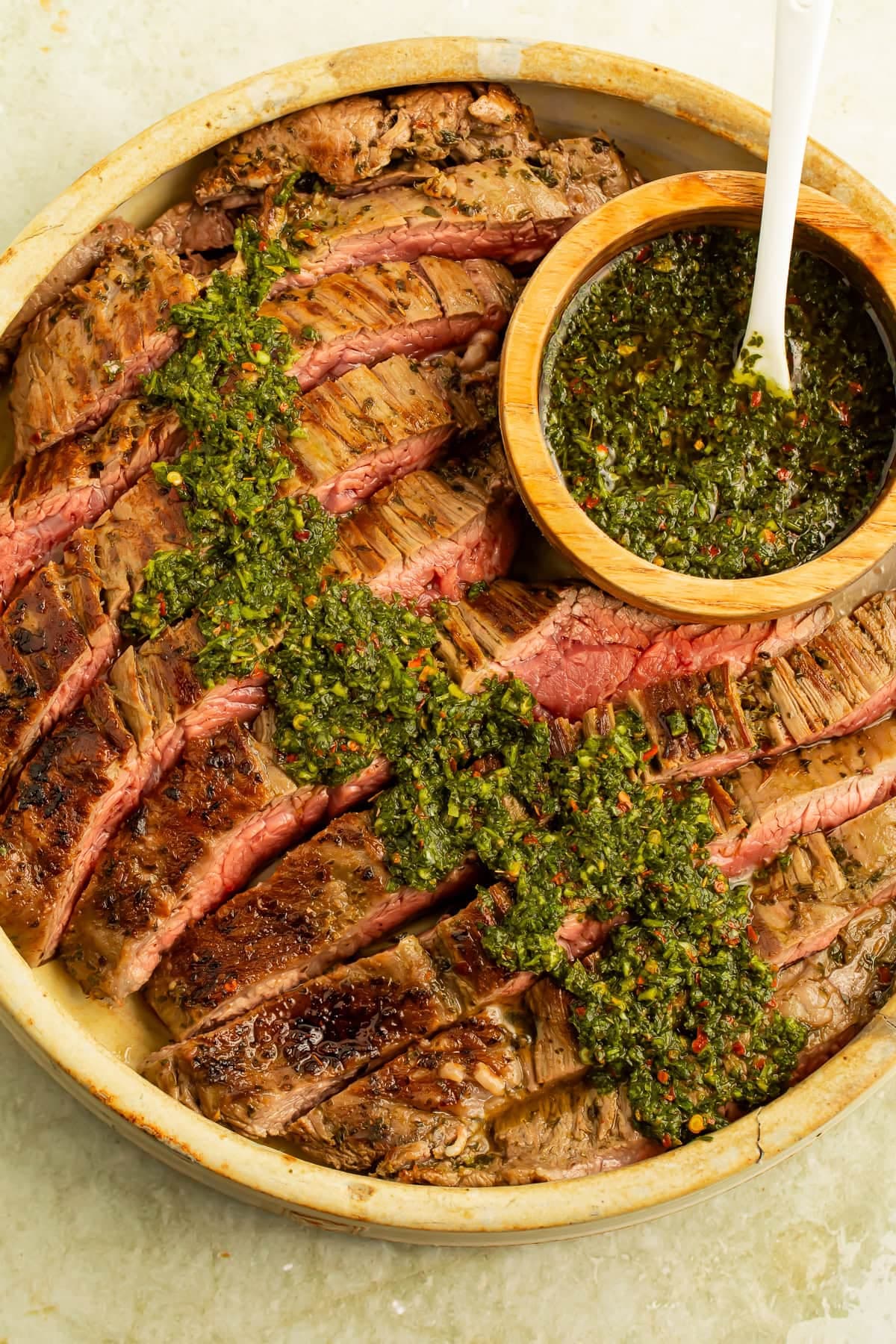
Use the sauce on steak, chicken, shrimp, fish, pork, roasted vegetables, potatoes, eggs, rice, salads, and pasta. The herb sauce is great for use on sliced grilled meats because it is thin and easy to pour onto a serving platter. Store leftover sauce in an airtight container in the refrigerator. If the ingredients have separated, shake or whisk the sauce vigorously to mix them again.
Why we keep this one around
- Brief pulses of the food processor will finely mince the herbs without turning them into a paste, resulting in a runny, oily texture, as specified in the recipe.
- Fresh lemon juice helps to revive dried oregano and provides lemon flavor that pairs well with other strong flavors in the dish, such as olive oil, garlic, and dried crushed red pepper.
- Adding garlic at the beginning prevents garlic chunks in your finished sauce and ensures even garlic flavor throughout your serving of sauce.
- Layering seasonings can help avoid over-seasoning by letting you taste as you cook. Salt and crushed red pepper are adjusted after tasting.
- A fresh oil is a key ingredient to add to the sauce to prevent other oils from making it bitter or oily.
- The raw version of this recipe preserves the taste and color of fresh herbs and can be served as a marinade or topping for grilled meat and other vegetables.
Ingredients
- •2 tbsp fresh garlic (roughly chopped; approximately 6 cloves; more or less to taste)
- •½ cup fresh parsley leaves
- •¼ cup fresh cilantro leaves
- •1 cup high-quality olive oil (or avocado oil)
- •¼ cup fresh lemon juice (4 tablespoons, from approximately 2 large lemons)
- •1 tbsp dried oregano
- •1 tbsp crushed red pepper (more or less to taste)
- •½ tbsp table salt (plus more to taste)
Instructions
- 1
Add the roughly chopped fresh garlic to the bowl of a food processor and pulse until minced.
- 2
Add the parsley leaves and cilantro leaves to the food processor and pulse until the leaves are uniformly chopped, scraping down the sides with a silicone spatula as needed.
- 3
Add the olive oil, lemon juice, dried oregano, crushed red pepper, and table salt. Pulse until well combined, being careful not to over-process the mixture into paste, and scrape down the sides as needed.
- 4
Taste the chimichurri and add garlic, crushed red pepper, and salt as needed. Add adjustments in small increments, pulse one to two times to incorporate, and taste again.
- 5
Use the prepared chimichurri to marinate meat of choice, or transfer it to an airtight container and refrigerate until ready to use.
FAQ
Nutrition (per serving)
135
Calories
0.2g
Protein
14g
Fat
Reviews
Pin this recipe
Tap an image to save it to Pinterest.