
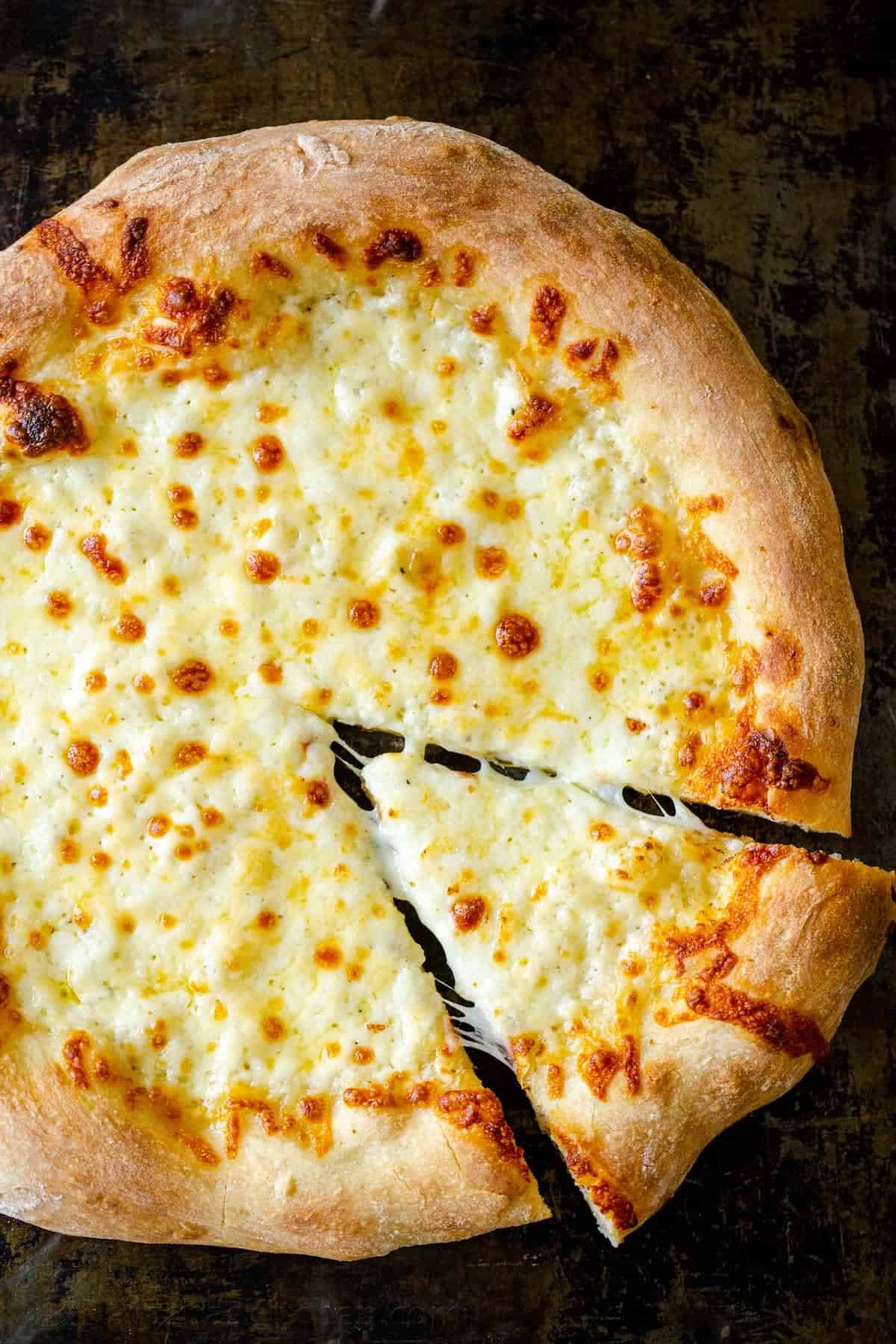
Overnight Pizza Dough: Crisp New York-Style Crust With Puffy Edges
By Isabella Quinn
Prep
10 min
Cook
1440 min
Total
1450 min
Servings
8
Level
Medium
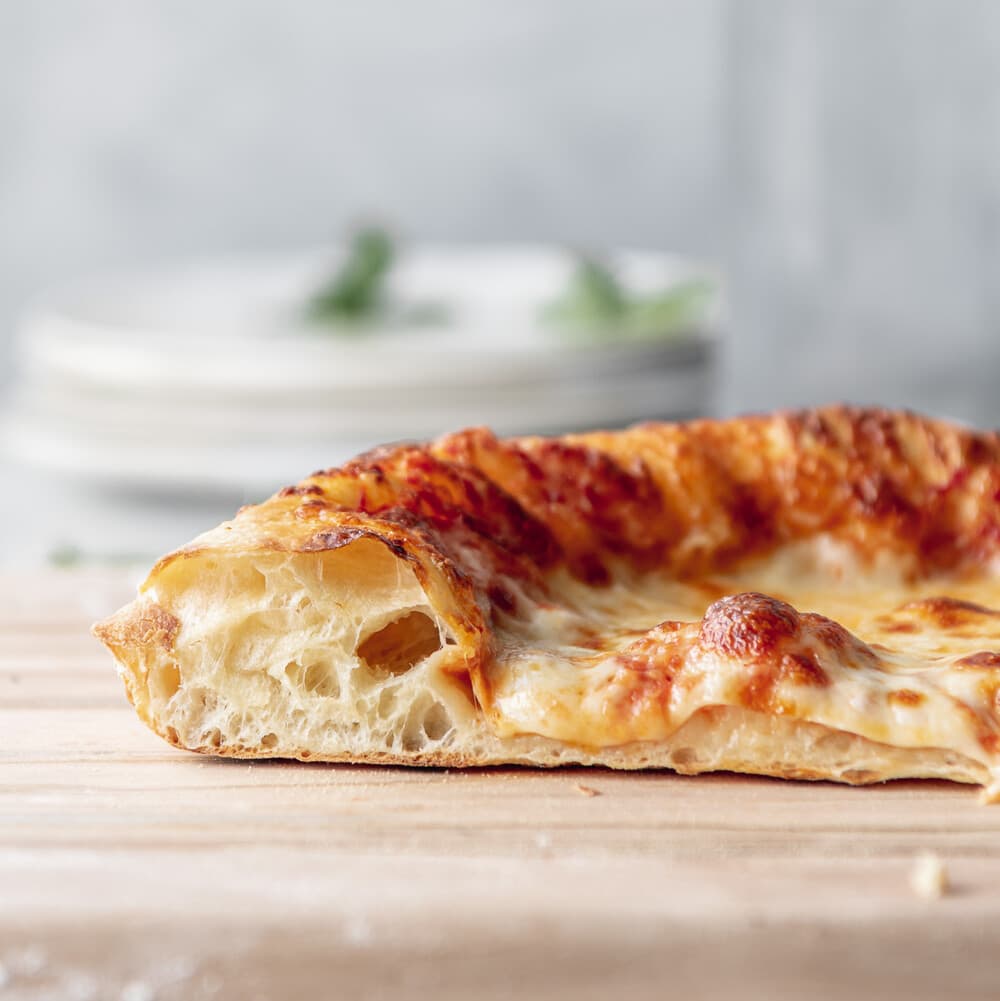
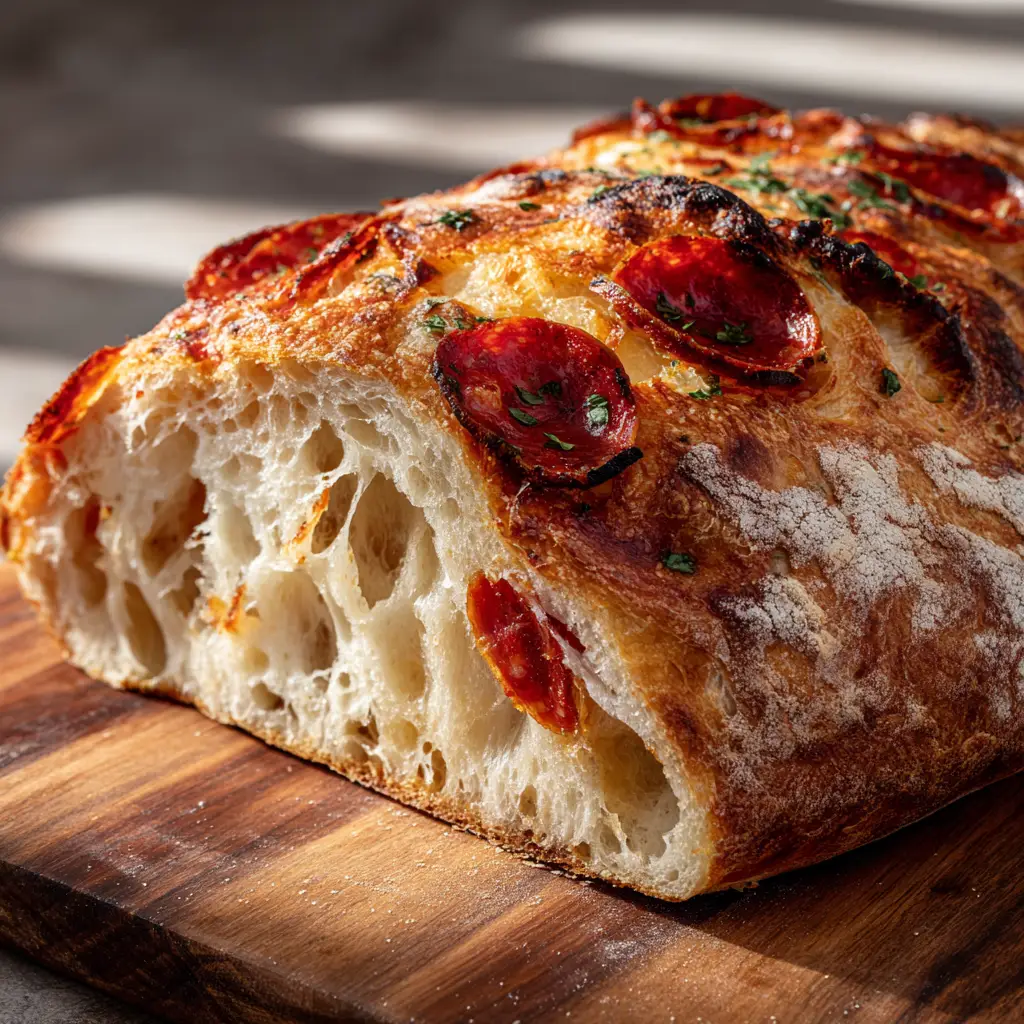
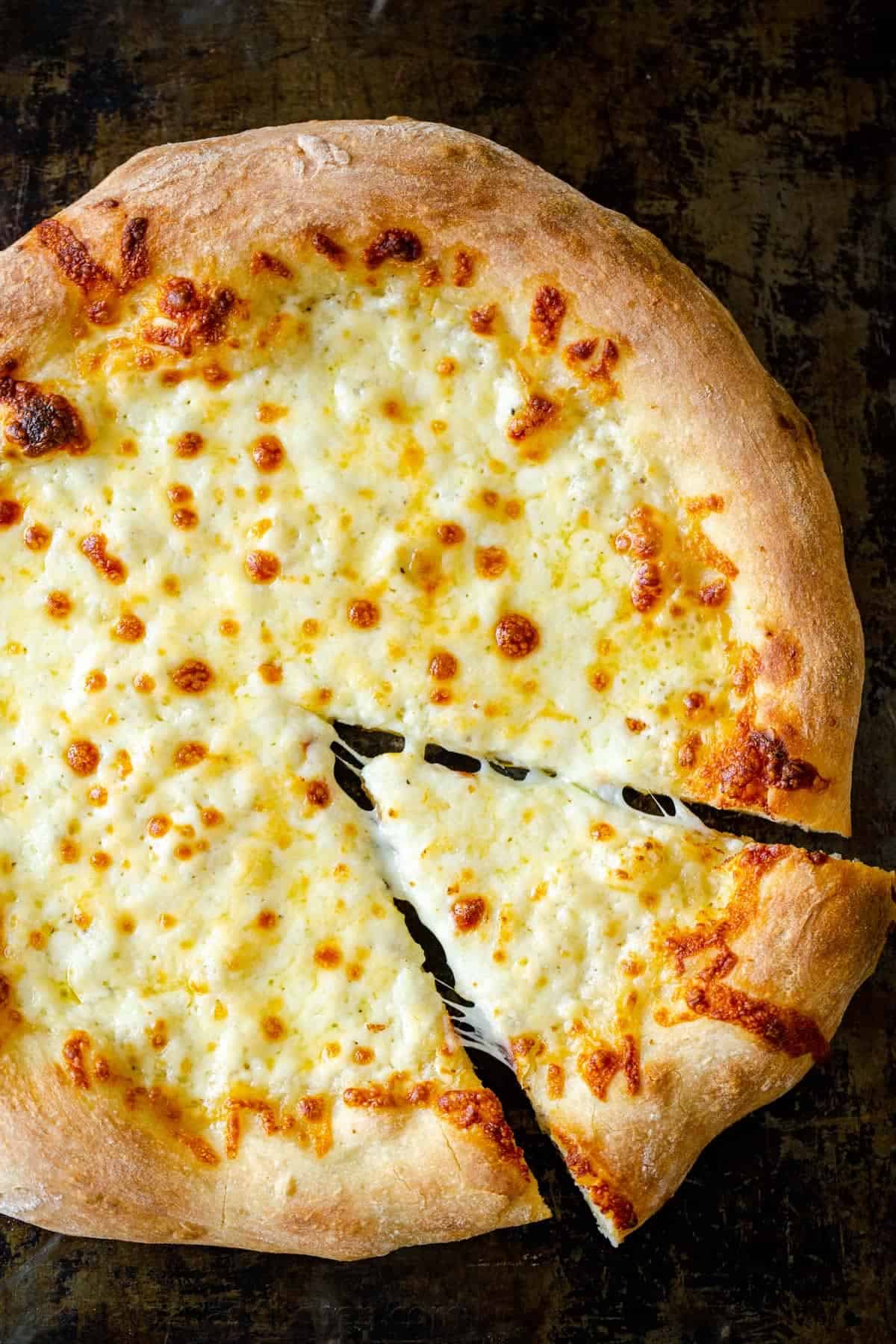
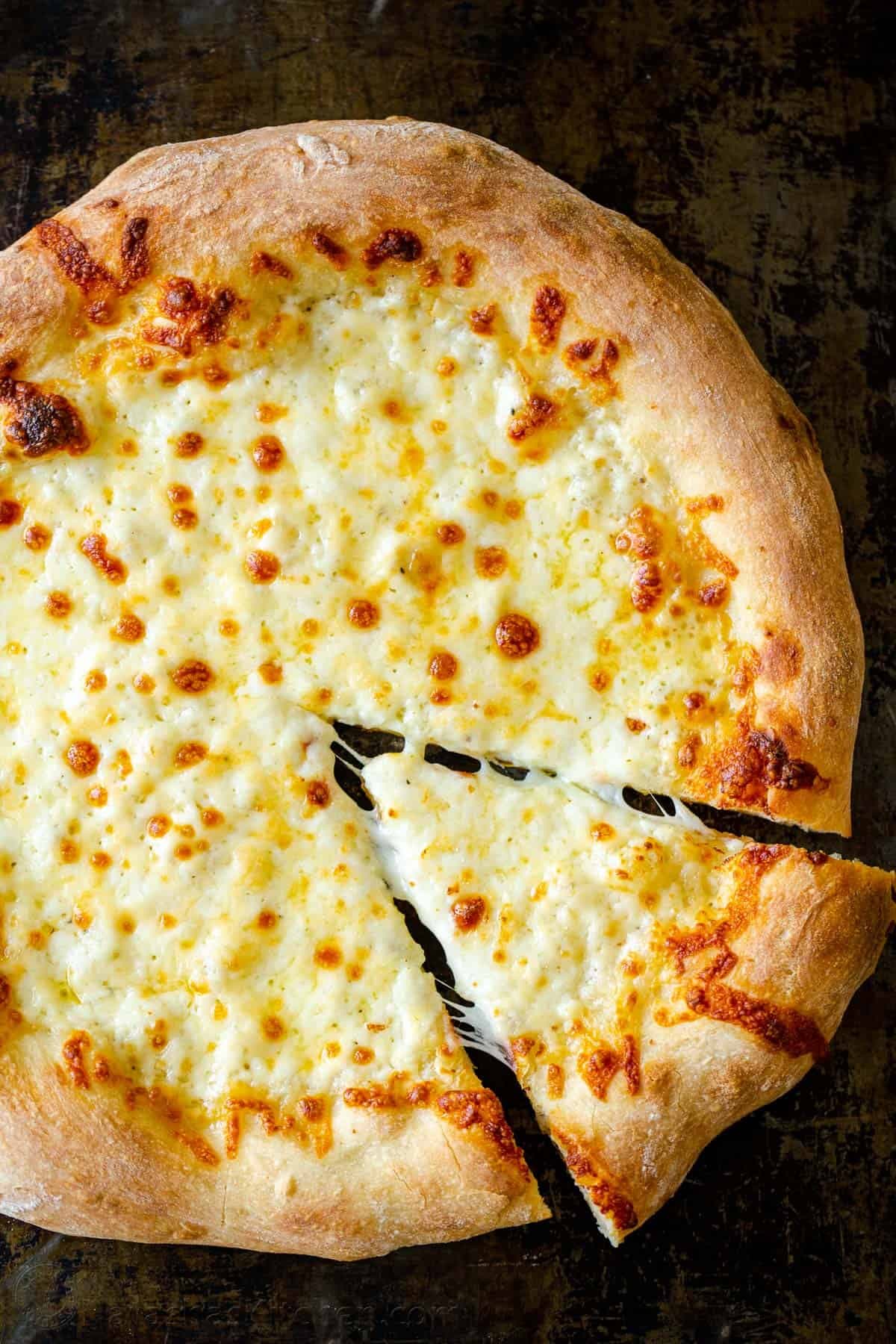
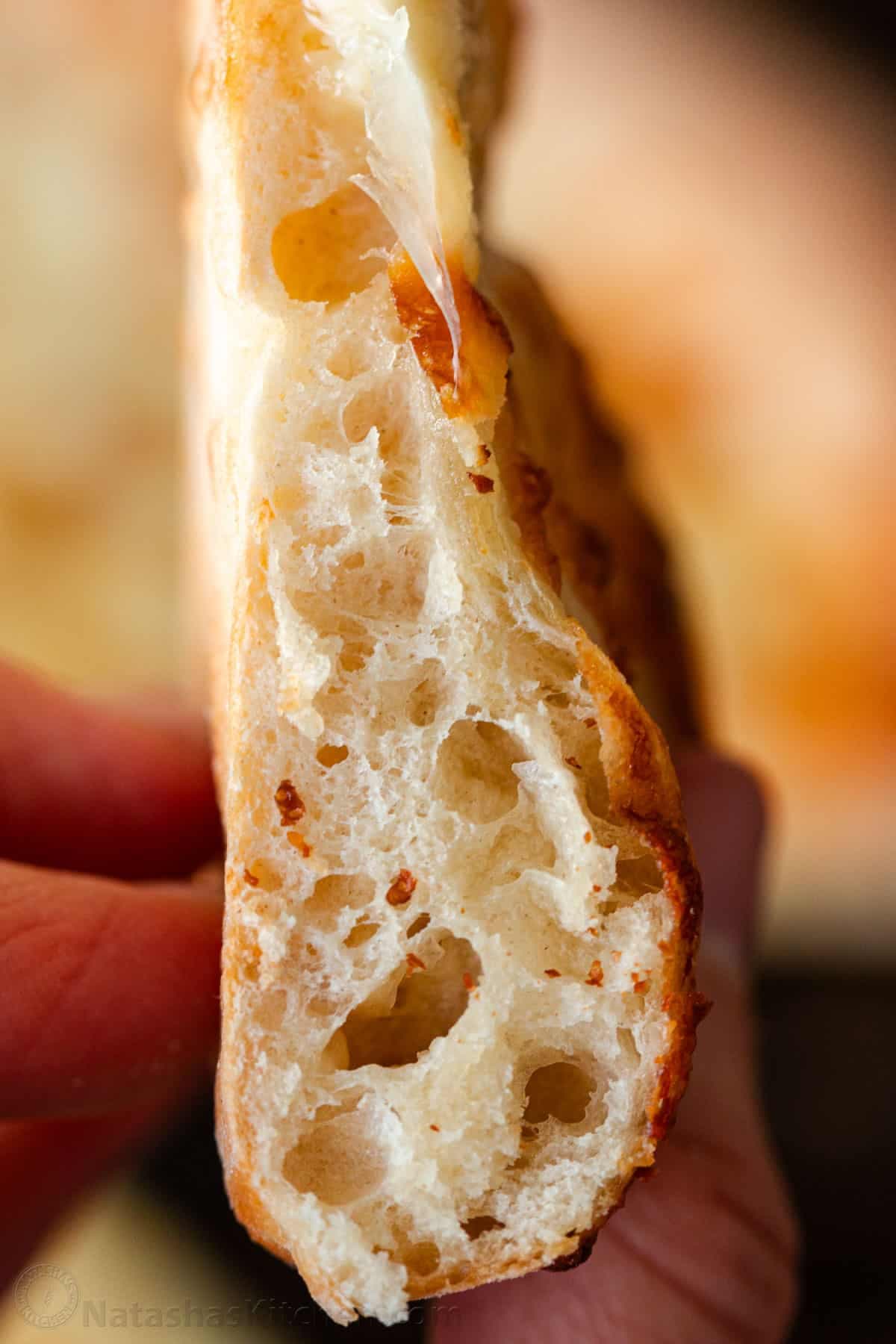
An overnight cold fermentation helps pizza baked from this dough develop a crisp interior and chewy exterior. The New York-style pizza dough includes water, honey, salt, yeast, and all-purpose flour and is baked hot on a stone.
The small amount of active dry yeast intentionally used will prevent a gummy pizza crust and the center from lifting. You mix and knead the honey, salt, water, and flour by hand. All-purpose flour is used in this recipe, but bread flour and 00 flour are alternatives that provide a chewier pizza crust.
Eight rolls of dough with books after the first rise will add stability and help the dough retain gas produced by yeast. The dough should double in volume before cutting and refrigerating. When forming the loaves, leave a one-inch strip of dough along the edges to help create puffed edges. Applying pressure to the sides of the dough or forming the loaves too quickly when cold will prevent puffed edges.
Reheat the dough for an hour or so before stretching and preheat the pizza stone or inverted baking sheet to prepare for adding toppings. Test the pizza by gently rattling it on a floured peel to ensure it will easily slide off the peel when baked. Leftover dough can be refrigerated for up to a week and used for other recipes besides pizza, including Stromboli and calzones.
Why we keep this one around
- Cold fermentation produces rolls with a light crust and rounded tops because fermentation is slower chilled than at room temperature.
- Eight folds in the book method to make pizza dough strengthen the dough by developing the gluten and trapping carbon dioxide released by yeast. Larger air bubbles develop toward the crust edge.
- A small amount of yeast can prevent a doughy pizza crust and keep the center of the pizza from rising when baked at high temperatures.
- A preheated baking stone or pan gives you a crunchy loaf of bread by offering a hot surface for the unbaked bread to touch immediately after it is removed from the peel.
- Shaking the pizza on the peel will allow you to feel if it's sticking and keep the pizza from stretching or distorting when moved to the oven.
- Knuckle stretch helps keep the air bubbles in the crust edge from collapsing while the middle of the crust becomes thinner. This leaves a 1-inch-thick border around the pizza.
Ingredients
- •1 ¼ cups warm water (105-110°F)
- •½ tsp active dry yeast
- •1 tsp honey
- •½ Tbsp fine sea salt
- •3 ⅓ cups all-purpose flour (measured correctly, plus more to dust)
Instructions
- 1
Stir together the warm water, honey, and salt in a small bowl.
- 2
Sprinkle the yeast over the water mixture and let it sit for 5 minutes.
- 3
Stir the yeast mixture.
- 4
Measure the flour into a large mixing bowl and make a well in the center.
- 5
Pour the yeast mixture into the flour well and stir with a firm spatula until the dough comes together.
- 6
Knead the sticky dough by hand for 2 minutes.
- 7
Cover the bowl with plastic wrap and let the dough rise at room temperature for 4-5 hours, or until doubled in size.
- 8
Transfer the dough to a floured surface, lightly coat it with flour, and divide it in half.
- 9
Fold each piece in half 8 times, gently pulling the sides over the center like closing a book and turning the dough after each fold.
- 10
Form each piece into a ball.
- 11
Transfer each dough ball seam-side down to a lightly oiled bowl.
- 12
Cover the bowls and refrigerate the dough overnight, about 18 hours, or for up to 1 week.
- 13
Remove the dough from the refrigerator 1 hour before using so it can relax and come to room temperature.
- 14
Place a pizza stone or inverted baking sheet on the center oven rack and preheat the oven to 550°F.
- 15
Lightly flour a pizza peel and prepare the toppings.
- 16
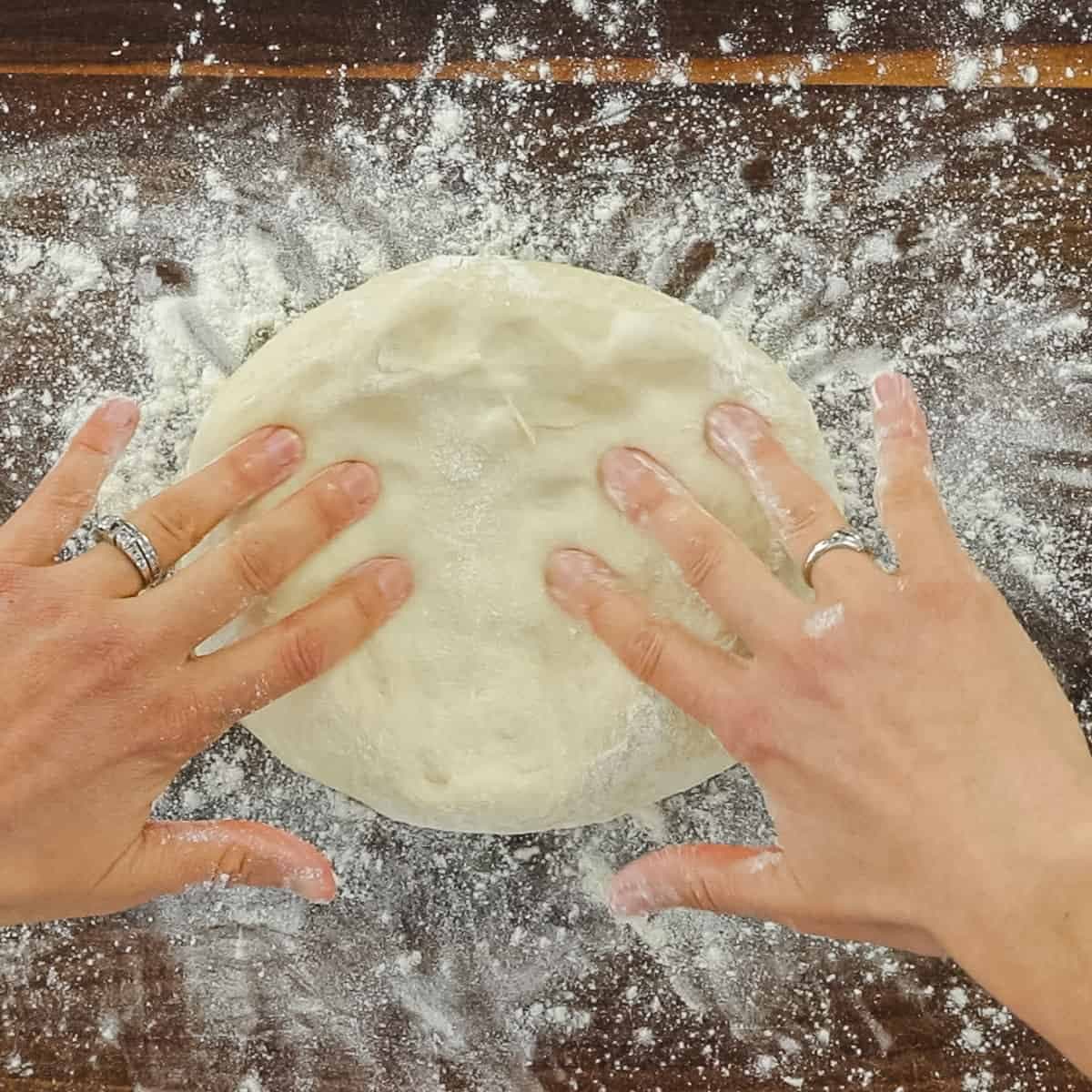
Transfer 1 dough ball to a floured surface and turn it to lightly coat with flour.
- 17
Gently pat the center of the dough with your fingertips without popping any bubbles.
- 18
Lift the dough over both knuckles and roll your knuckles under the center while rotating the dough, leaving a thicker crust at the edge.
- 19
Continue stretching until a 10-12 inch pizza has formed, making it slightly larger because it will shrink a little.
- 20
Place the dough on the lightly floured pizza peel and shake it gently to confirm that it slides freely.
- 21
Spread on the desired pizza sauce and toppings.
- 22
Jolt the topped pizza again to make sure it still slides on the peel.
- 23
Slide the pizza onto the preheated stone and bake at 550°F for 8-10 minutes, until the crust is golden brown and larger bubbles are lightly scorched.
FAQ
Nutrition (per serving)
193
Calories
5g
Protein
1g
Fat
41g
Carbs
Reviews
Pin this recipe
Tap an image to save it to Pinterest.